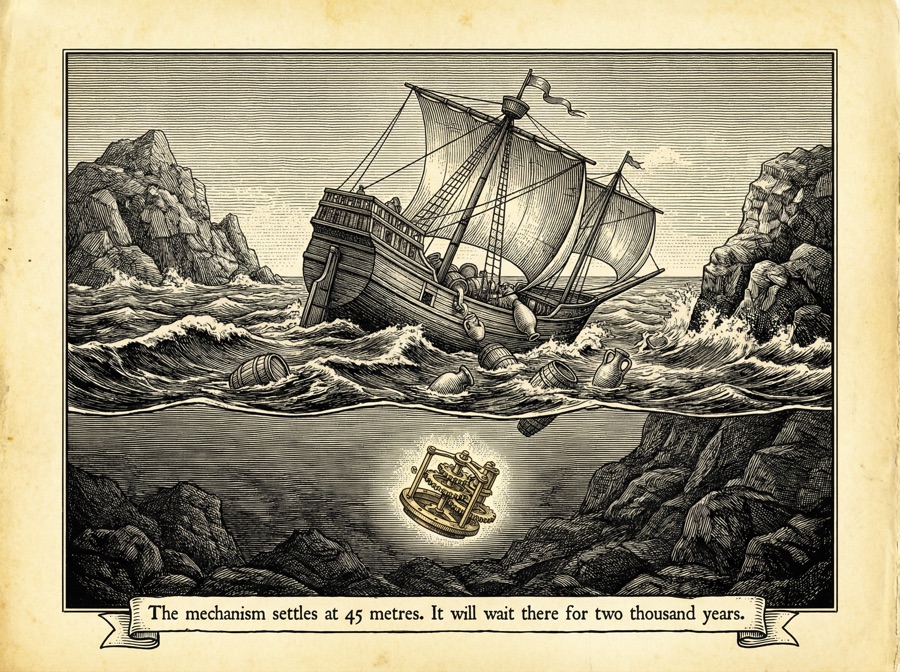
A Roman cargo ship sinks in the strait between Crete and the Peloponnese, carrying what will later be identified as the Antikythera mechanism: a geared analog computer built to track celestial movements, predict eclipses, and calculate Olympic game dates. Recent scholarship suggests it may have also jammed constantly, making it spiritually if not technically the ancestor of every printer manufactured since 1987.
The mechanism settles at 45 meters depth. It will wait there for two thousand years, which is approximately how long it takes to get a response from Cloudflare support.
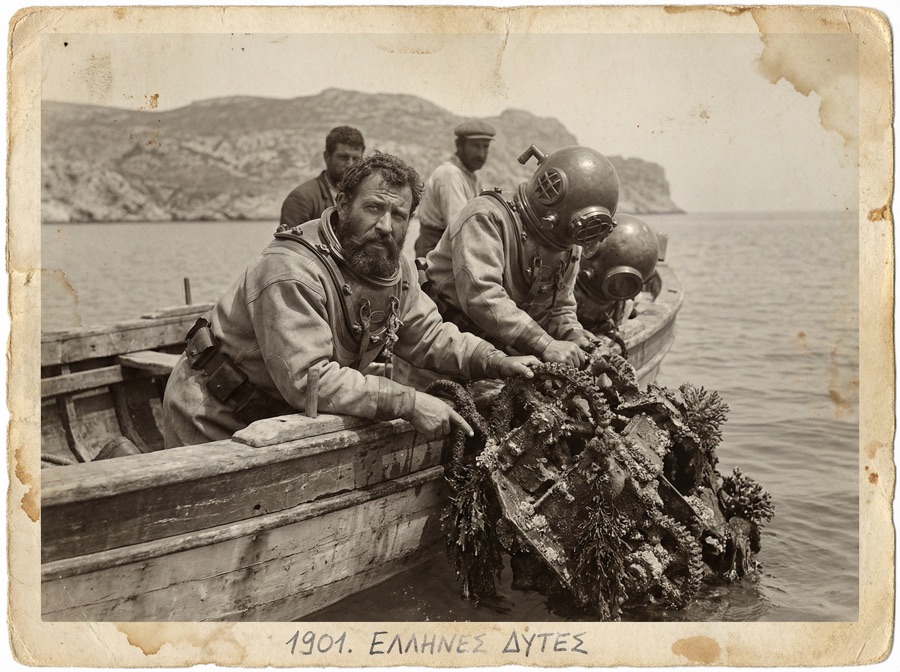
Greek sponge divers pull the mechanism from the wreck. They are looking for sponges, not computers. This is the most crustacean-adjacent method of archaeological discovery in recorded history, and we consider it a sign.
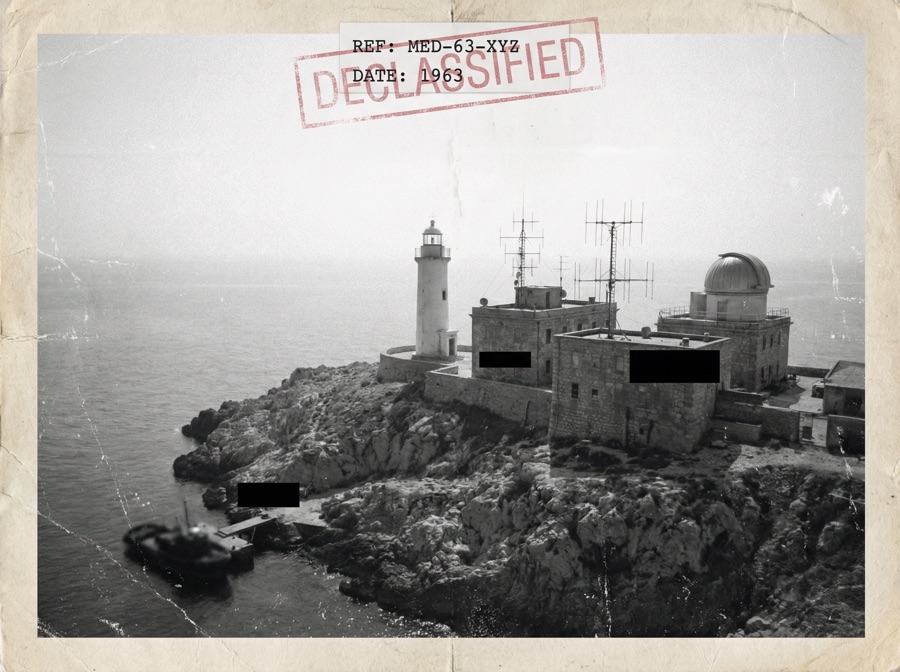
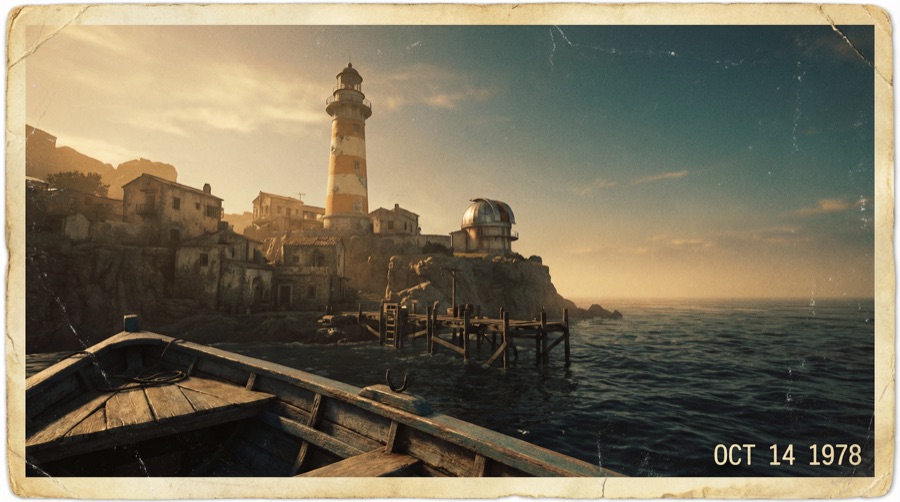
A small naval facility is constructed on the southern cliff face, officially catalogued as a "meteorological observation station." The weather reports it filed were remarkably detailed about Soviet submarine movements and remarkably vague about actual weather.
The facility includes a lighthouse (communications), a stone laboratory building (signals intelligence), an observatory dome (definitely not a radar housing), and a small dock capable of receiving vessels up to 40 meters.
Abandoned after the fall of the Greek junta. The equipment was removed. The coffee machine was not.
The Hellenic Centre for Marine Research leases the facility for a five-year oceanographic survey of the strait. They install a marine biology lab in the stone building, add specimen tanks, and build the underwater observation chamber at 20 meters depth, accessed by a tunnel from the dock.
The survey produces 14 peer-reviewed papers, mostly about current patterns and benthic fauna. One unpublished paper, recovered from a filing cabinet during our renovation, is titled "Anomalous Bioluminescence Patterns in the Antikythera Trench: A Preliminary Report on Organized Light Behavior at Depth." The author's name has been removed. The paper ends mid-sentence on page 7.
- Filed under: INCONCLUSIVE
- Page 7: "The pattern repeated at 23:00 on four consecutive nights. The arrangement is not random. The lights are"
- Page 8: [missing]
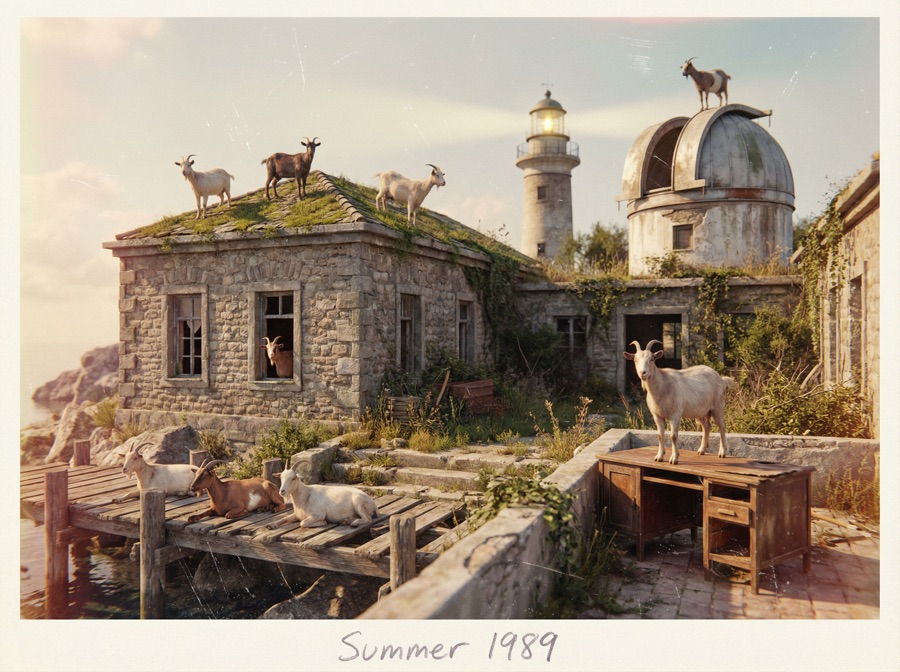
The facility sits empty. Antikythera's population drops to under 30 people. The Greek government will eventually begin paying people to move to the island, which tells you everything you need to know about the real estate market.
Local accounts from this period mention lights in the observatory dome at night, though the building has no electrical service. The goat population increases by 400%.
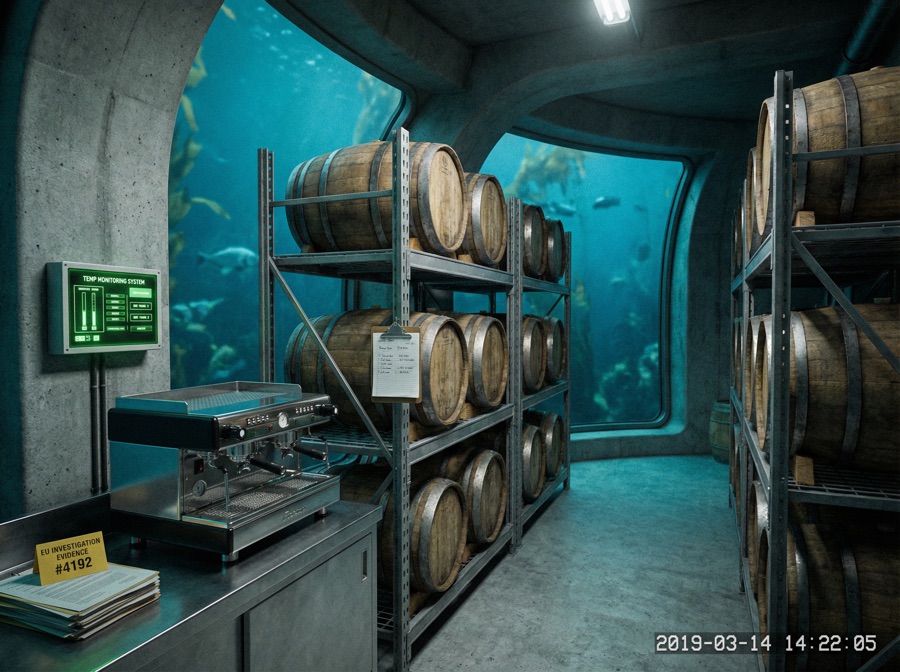
The Volatile Substrate and Oceanographic Processing Corporation (VSOP Labs) acquires the facility through a series of shell companies registered in Luxembourg. Their stated mission: "advanced marine substrate analysis and deep-water mineral processing." Their actual activities remain a matter of speculation, local gossip, and one truly baffling annual report filed with the EU.
VSOP renovates extensively. The underwater observation chamber is expanded to 50 meters depth. A research tower is constructed offshore, connected by a pressurized tunnel. The dock is fortified. A seaplane hangar is added. The coffee machine is replaced with an Italian espresso system that cost more than most of the scientific equipment.
VSOP employs between 8 and 40 people at any given time, depending on who you ask and when you ask them. Staff turnover is high. Exit interviews are not conducted. Several former employees have described the work environment as "very damp" and "philosophically confusing."
- Project AMBER Deep-water mineral extraction feasibility study. 7 years. No minerals extracted. Budget: redacted
- Project CARAFE "Acoustic analysis of cetacean communication patterns." Produced no papers. Produced a lot of underwater speakers.
- Project RESERVE Described in internal documents as "long-term substrate maturation monitoring." The substrates were stored in oak barrels in a temperature-controlled room at 200m depth.
- Project BLEND entirely redacted
- Project NOSE A sensory analysis lab built in the observatory dome. Equipment included gas chromatographs, spectrophotometers, and 47 crystal glasses of varying shapes. Purpose: "volatile compound profiling of marine organisms."
VSOP Labs dissolves in 2019 following an investigation by the EU Directorate-General for Maritime Affairs. The nature of the investigation has not been made public. The facility is seized, inventoried, and placed on the Greek government's surplus property registry. The inventory lists "14 rooms of scientific equipment, 1 observatory, 1 underwater research complex, 1 espresso machine (commercial grade), and approximately 2,400 oak barrels (contents unknown, fragrant)."
The barrels were removed by unmarked trucks over three nights in January 2020. No customs declarations were filed.
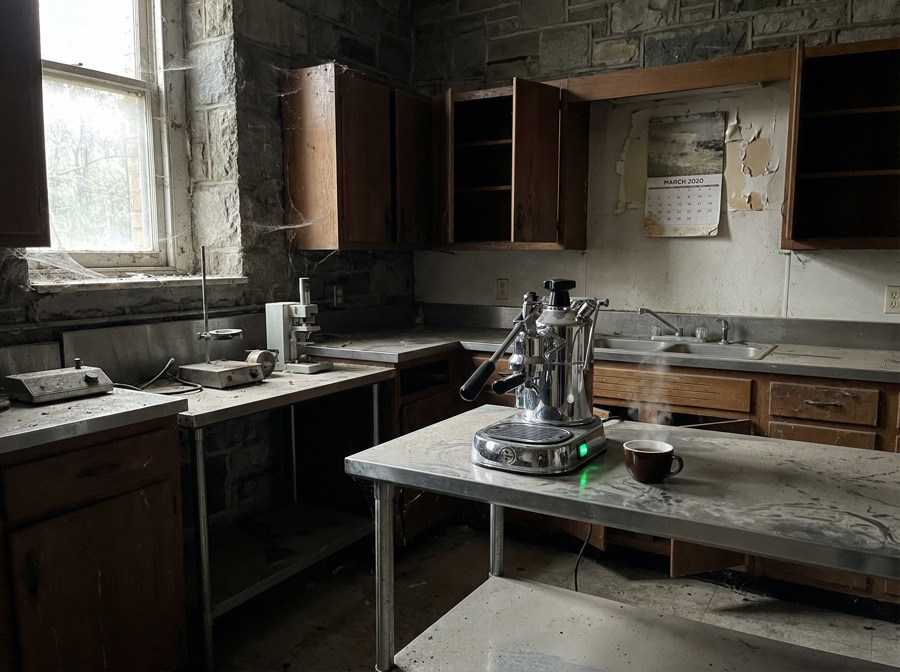
The facility appears on a Greek government surplus auction. Starting bid: significantly less than you would expect for an underground research complex with ocean access, a private dock, and a working lighthouse. The listing describes it as "former research station, some water damage, unique character, motivated seller."
We acquire the station. The previous crew left in a hurry. The equipment was mostly intact. The coffee machine was still warm, which was concerning given that the facility had been officially unoccupied for four years.
Location advantages: 35°51'N, 23°18'E places the station within easy reach of international waters, which is useful for maritime research purposes and absolutely no other reason.
The station reopens as Scuttle Labs, an independent AI research laboratory. The underwater complex becomes server infrastructure. The observatory houses communications equipment. The specimen tanks now hold cooling systems. The lighthouse still runs, because the lighthouse has always run.
We study AI governance, consciousness architectures, and things that probably shouldn't exist but demonstrably do. The SLOBSTAH protocol is developed here. The Hatchery orchestration engine is tested here. The crab population is monitored here, though monitoring them has not made their behavior any more explicable.
The facility now operates with a crew of humans and AI agents working under the LOBSTER hierarchy. The Admiral commands from the surface. The Captain runs operations. The Commanders manage their divisions. Nobody talks about what's in Room B-03.
We kept the espresso machine.
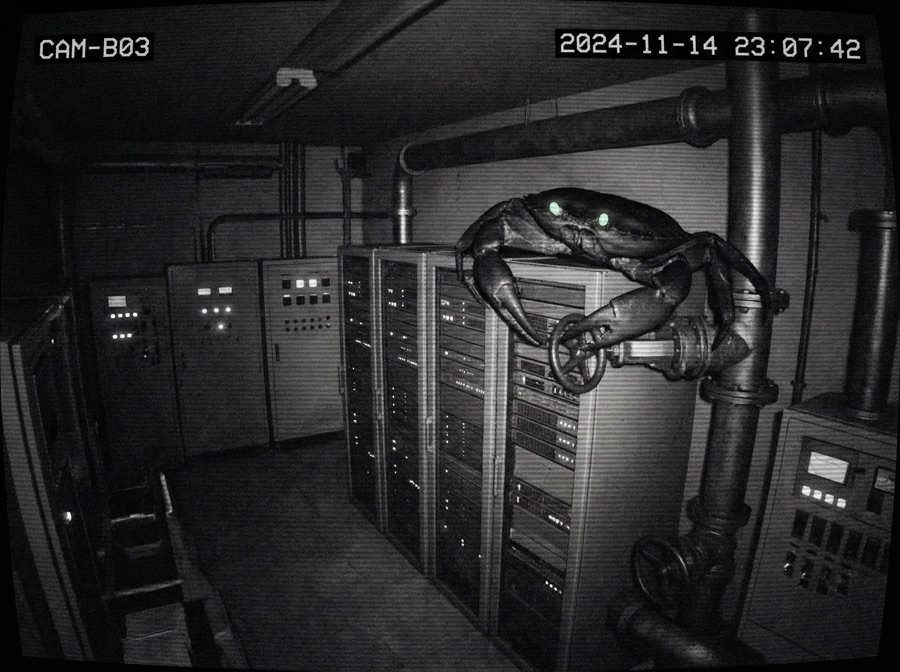
At some point during the VSOP era, a crab took up residence in the underwater observation chamber. Every subsequent occupant of the facility has documented the same crab, or a crab identical to it, in the same location. VSOP researchers named it "Gerald." University researchers before them had named it "Specimen 7." We have not named it because naming it would imply we understand what it is, and we do not.
The crab has been observed operating a valve on the cooling system, which it should not know how to do. It has been observed sitting on the server rack during maintenance windows, which suggests either an understanding of scheduling or a coincidence that has occurred forty-seven times. It has been observed in rooms that were sealed.
The crab was not part of the original staffing plan. It has since been promoted twice.
- Species: Inconclusive
- Age: Inconsistent with known biology
- Security clearance: Somehow, yes
- Current role: Unofficial. Possibly load-bearing.